Why Ants Keep Coming Back After Treatment
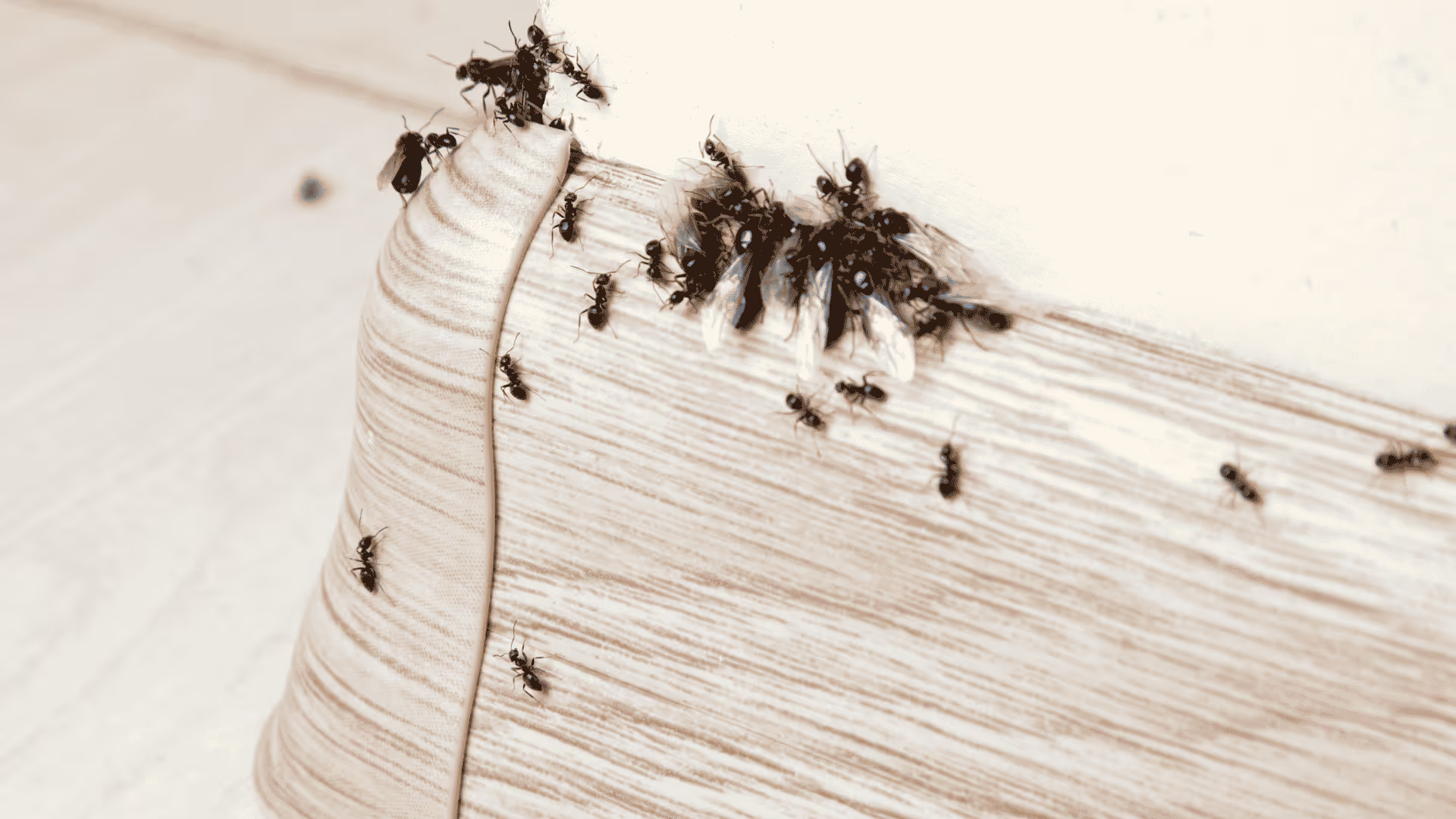
Ants are one of the most common summer pest complaints in Salt Lake City, and most homeowners deal with them the same way: grab a can of spray from the hardware store, hit the trail on the kitchen counter, and call it done. Then, a week later, the ants are back. Sometimes in a different spot. Sometimes in greater numbers.
This is one of the most frustrating cycles in pest control, and it happens because the standard DIY approach targets the wrong thing. Understanding why ants keep coming back starts with understanding how they actually operate.
Why Over-the-Counter Sprays Usually Fail
Most products sold at grocery and hardware stores are repellent insecticides. They kill the ants you can see, which feels like progress. The problem is that the ants you see are foragers, scout workers sent out by the colony to find food and water. Killing foragers does not affect the colony itself, which may contain tens of thousands of insects living underground or inside a wall void.
Repellent sprays create another issue: they cause colonies to split. When ants detect a chemical barrier, the colony can fracture and relocate, spreading to new areas of your home. What started as one ant problem in the kitchen becomes two problems in the kitchen and bathroom. This is called budding, and it is especially common with certain Utah ant species.
Common Ant Species in Utah Homes
Not all ants behave the same way, and knowing which species you are dealing with helps explain their behavior.
- Pavement ants are among the most common in Utah. They typically nest under slabs, sidewalks, and foundations. You will often see them trailing along baseboards or entering through expansion joints and cracks in concrete. They are small, dark brown, and tend to be most active in spring and early summer.
- Odorous house ants get their name from the rotten coconut smell they release when crushed. They are highly adaptable and will nest almost anywhere: inside wall voids, under flooring, beneath mulch next to the foundation. Colonies can have multiple queens, which makes them especially difficult to eliminate with repellent products.
- Carpenter ants are larger, usually black or bi-colored, and do not eat wood. They excavate it to build galleries for nesting. They are drawn to moisture-damaged wood and can cause structural damage over time if left untreated. A carpenter ant problem inside your home usually signals a moisture issue somewhere as well.
How Ant Colonies Actually Work
To get rid of ants for good, you have to understand the structure you are up against. Every ant colony is built around a queen (or in some species, multiple queens). The queen's only job is to reproduce. She stays deep in the nest and never forages. As long as the queen is alive, the colony survives and recovers from any surface-level losses.
The ants you see on your counter are foragers. They leave the nest, follow pheromone trails to food and water sources, and return to share what they found. Those trails are invisible to you but are clear signals to every ant in the colony. Spraying foragers removes a small percentage of the worker population and disrupts the trail temporarily, but the colony replaces them quickly.
This is why eliminating the source, specifically the colony itself and especially the queen, is the only way to actually resolve an ant infestation.
What Professional Treatment Does Differently
Professional ant treatment works differently at almost every step.
Rather than repellent products, licensed technicians use non-repellent transfer insecticides. Ants cannot detect these products, so they walk through treated areas and carry the active ingredient back to the nest on their bodies. It spreads through the colony, reaching the queen and eliminating the source. This process takes time, usually days to a couple of weeks, but it produces lasting results rather than temporary knockdown.
Professional treatment also includes perimeter applications around the foundation, entry points, and conducive areas outside the home. This addresses foraging pressure before it gets inside. A trained technician can also identify which species is present, where likely nesting sites are, and whether conditions like moisture, vegetation contact, or cracks in the foundation are contributing to the problem.
DIY Steps That Actually Help Between Visits
There are things you can do at home that genuinely support professional pest control treatment, and some things you should stop doing.
- Eliminate food and water sources. Store food in sealed containers, clean up crumbs and spills promptly, and do not leave pet food out overnight. Fix any leaking pipes or faucets, especially under sinks.
- Seal entry points. Caulk cracks around baseboards, window frames, door frames, and utility penetrations. Ants can enter through gaps as small as a credit card's thickness.
- Do not spray forager trails with repellent products while a professional treatment is active. You can disrupt the transfer process and reduce effectiveness.
- Keep mulch and vegetation away from the foundation. Direct soil contact and dense mulch right against your home create ideal nesting and harborage conditions.
- Trim branches and shrubs that contact the exterior walls or roofline. Ants use these as bridges to enter above the foundation.
Frequently Asked Questions
Why do I see more ants right after a professional treatment?
This is normal and actually expected. Non-repellent products work by transfer, so foragers need to pick up the product and return to the nest. Increased activity in the first few days after treatment means foragers are moving through the treated area. Activity should decline steadily over one to two weeks as the product spreads through the colony.
Are ants worse in summer in Salt Lake City?
Yes. Warmer temperatures accelerate ant activity across all species. Utah's dry summer heat also drives ants indoors in search of moisture. Late spring through early fall is peak season for ant complaints, though some species remain active year-round in heated structures.
Can I treat an ant problem myself permanently?
Occasional light ant activity can sometimes be managed with bait products applied carefully and consistently. However, established infestations, especially with odorous house ants or carpenter ants, rarely resolve without professional treatment targeting the colony. Repellent sprays from retail stores will not eliminate the source and often make the problem harder to treat later.
How do I know if I have carpenter ants versus regular ants?
Carpenter ants are noticeably larger than pavement or odorous house ants, often a half inch or more. They are typically black or have a reddish-brown midsection. You may see coarse sawdust-like material (called frass) near baseboards or in crawl spaces. If you see large ants inside your home, especially at night or near moisture-damaged wood, contact a pest professional for an inspection.
How soon after treatment should ant activity stop?
With non-repellent professional products, expect a noticeable reduction within one to two weeks. Complete elimination of a large colony can take up to three to four weeks depending on colony size, species, and nest location. If activity has not declined after two weeks, contact your pest control provider. A follow-up application or adjusted approach may be needed.
Ready to Get Rid of Ants for Good?
If ants in your home keep coming back no matter what you try, the issue is almost always that the colony has never been addressed. Pest Pro Pest Control treats ant infestations throughout the Salt Lake City area using professional-grade products and targeted approaches for each species. We identify the problem, treat the source, and give you honest guidance on preventing re-entry.
Call us at 801-810-7378 to schedule a treatment or ask about our service area. Same-day appointments are often available.
Request Your Free Estimate
Service often can be scheduled within 24 hours.