
Bats in Your Utah Home: Facts, Laws & What To Do
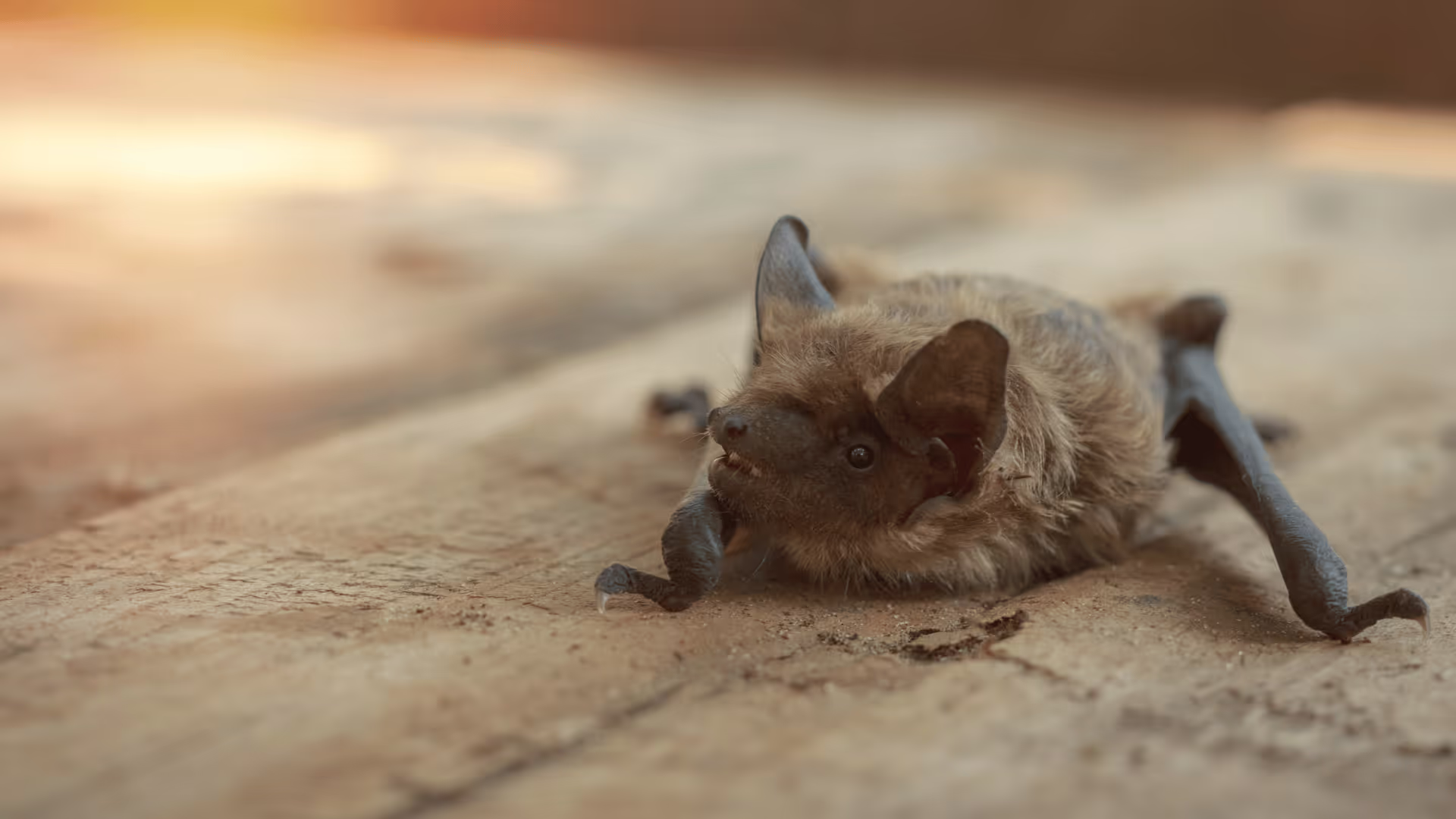
If you live in Utah and have noticed a faint musky odor coming from your attic, or you have watched small dark shapes dart out from under your eaves at dusk, there is a good chance bats have moved in. Bats are genuinely valuable animals. A single little brown bat can eat hundreds of mosquitoes in an hour, and a colony will consume enormous quantities of agricultural pests over the course of a summer. That said, having them roost inside your home is a different situation entirely. Bat guano accumulates quickly, carries real health hazards, and the structural damage and odor problems they leave behind are not minor. This guide covers everything Utah homeowners need to know about bats in the home, including the state laws that govern what you can and cannot do about them.
How Bats Get Into Your Home
Bats do not need a large opening to get inside. The little brown bat, the most common species found in Utah homes, can squeeze through a gap as small as three-eighths of an inch. That is roughly the diameter of a pencil eraser. Common entry points include ridge vents with damaged or missing mesh, gaps where the fascia board meets the soffit, open or unscreened chimney flues, cracks in brick mortar or deteriorating caulk around eaves, spaces around pipes, conduit, or cables that penetrate exterior walls, and loose or warped siding near the roofline.
Bats are creatures of habit. Once a colony establishes a roost in your attic or wall void, they will return to the same spot year after year. The longer they are present, the more guano and urine accumulates, and the harder remediation becomes.
Signs You Have Bats in Your Home
Most homeowners do not notice bats right away. The colony is often active at night while the house is quiet, and the entry points are typically up high where they are not visible from the ground. Here are the signs to watch for:
- High-pitched squeaking at dusk or dawn. Bats are vocal, especially as they prepare to leave or return to the roost. You may hear chattering in your attic walls or near the roofline.
- Small dark droppings that crumble to powder. Bat guano looks similar to mouse droppings but turns to a fine powder when crushed rather than smearing. You may find accumulations below entry points, on attic insulation, or on exterior walls beneath gaps.
- Greasy brown staining around entry points. Bats have oily fur, and repeated use of the same gap leaves a dark, greasy smear on siding, trim, or brick. This is one of the clearest indicators of an active entry point.
- Watching bats fly out at sunset. If you stand outside your home around dusk and observe where bats emerge, you can often identify the primary exit point directly.
- A persistent musty or ammonia-like odor. As guano and urine accumulate in an enclosed space, the smell becomes noticeable and eventually pervasive. If your attic smells like a cave, bats are a likely cause.
Health Risks Associated With Bats in the Home
Bats in the wild pose little direct threat to people. Bats roosting inside your living space are a different matter for two primary reasons.
Histoplasmosis. Bat guano can harbor the spores of Histoplasma capsulatum, a fungal organism that causes histoplasmosis, a respiratory illness that can range from mild flu-like symptoms to serious lung disease in people with compromised immune systems. Disturbing dried guano without proper respiratory protection is how most exposures occur. Cleanup of accumulated bat guano is not a task to approach casually.
Rabies. Bats are a known reservoir species for rabies in North America. The risk from casual proximity is low, but direct contact with a bat requires medical evaluation. If you wake up and find a bat in your bedroom, or if a child or pet has had contact with a bat, contact your local health department immediately. Bat bites can be small enough to go unnoticed.
Utah Law and the Maternity Season Restriction
Before you do anything about bats in your home, you need to understand Utah law. Bats are protected nongame wildlife under Utah state code and are managed by the Utah Division of Wildlife Resources. This protection has a direct practical consequence for homeowners: you cannot legally evict bats from your home during maternity season, which runs from May 1 through August 31.
During this window, female bats give birth and raise pups that are too young to fly. If you seal entry points while the colony is inside during maternity season, the pups will be trapped. The adults that are outside cannot get back to their young. The result is a structure full of dead and dying bats, compounding the health hazard and the odor problem dramatically. Beyond the practical consequences, causing this outcome is a violation of state wildlife regulations.
The best times to address a bat problem in Utah are fall, after the pups have grown and the colony is preparing for winter, or early spring before the maternity season begins again. A professional who works with bats in Utah will be familiar with this timing requirement and will plan the bat exclusion accordingly.
DIY Prevention Tips
If you want to reduce the chance of bats getting into your home in the first place, or if you are preparing your property ahead of a professional exclusion, there are steps you can take on your own.
Seal gaps of three-eighths of an inch or larger using heavy-gauge hardware cloth, metal flashing, or caulk rated for exterior use. Do not use spray foam insulation as a primary bat seal. Bats are capable of chewing through it, and it does not hold up the same way metal barriers do.
Install a chimney cap. An uncapped chimney flue is an open invitation. A quality stainless steel cap with mesh sides blocks bats while still allowing the chimney to function properly.
Inspect eaves and ridge vents annually. Plastic ridge vent mesh degrades over time and pulls away from the roofline. Check it each spring before maternity season begins.
Reduce exterior lighting near the roofline. Insects are drawn to light, and bats follow insects. Shifting exterior lights away from the eaves or switching to yellow-spectrum bulbs that attract fewer insects can make your roofline less attractive as a hunting ground and, by extension, as a roost location.
Why Professional Bat Exclusion Is the Right Call
Bat exclusion is not complicated in concept, but it requires careful execution to be both effective and legal. A one-way bat valve is a device installed over the primary exit point that allows bats to leave the structure at night but prevents them from re-entering. Getting it right involves a few things that are easy to get wrong on your own.
First, every secondary entry point on the structure must be sealed before the valve is installed. If even one gap remains open, the bats will simply shift to it and the exclusion fails. A thorough inspection requires knowledge of how bats move and where they tend to enter on different building types. Second, the timing restriction described above applies fully. Installing an exclusion device during maternity season is illegal regardless of whether you are a homeowner or a contractor. Third, once the colony has vacated and the valve has been removed, the main entry point must be permanently closed. Leaving it open means the bats return the following year.
Beyond the exclusion itself, the guano cleanup and sanitation work that follows is a health and safety task that warrants professional handling. Proper respiratory protection, appropriate disinfectants, and safe disposal of contaminated insulation are all part of a complete remediation.
Frequently Asked Bat Questions
Are bats dangerous?
Bats roosting outside do not pose a meaningful threat to people. Bats roosting inside your home create real health risks through guano accumulation and the potential for rabies transmission through direct contact. If you find a bat inside your living space, do not handle it with bare hands, and seek medical advice if any skin contact occurred.
Can I seal bats out myself?
You can seal gaps around your home to prevent bats from entering, but sealing an active roost requires confirming that no bats or pups are present inside first. Sealing an occupied roost outside of the proper season is illegal in Utah and will make the situation significantly worse. If you suspect bats are already inside, contact a professional before attempting any sealing work.
What is a bat valve and how does it work?
A bat valve, sometimes called a bat cone or exclusion tube, is a one-way device installed over an active exit point. When bats leave the roost at night to feed, they pass through the valve and exit the structure. When they return and attempt to re-enter, the design of the valve prevents them from getting back in. Over several nights, the colony relocates. The valve is then removed and the opening is permanently sealed.
When is the best time to do bat exclusion in Utah?
Fall is generally the preferred window, from September through October, after the year's pups are capable of flying and before temperatures drop enough to drive bats into torpor inside the structure. Early spring, before May 1, is also a viable option. Exclusion work between May 1 and August 31 is prohibited under Utah wildlife regulations.
Do bats come back after exclusion?
If the exclusion is done correctly and all entry points are permanently sealed, bats typically do not return to that structure. Bats are loyal to roost sites, so they may investigate the old location, but if there is no way in they will find another roost. The key is a thorough job the first time, with no gaps left unsealed.
Get Legal, Humane Bat Removal in Utah
Pest Pro Pest Control serves homeowners across the Salt Lake City area and handles bat exclusion the right way. We inspect your structure to identify every active entry point and all secondary gaps, install one-way bat valves at the locations bats are actively using, and return to permanently close those openings after the colony has vacated. We operate in full compliance with Utah Division of Wildlife Resources regulations, which means we will be direct with you about timing and will never perform exclusion work during the protected maternity season.
If you are dealing with guano accumulation, we can also address the sanitation and cleanup work that follows. Bat removal in Utah is not a job that benefits from cutting corners, and we treat it accordingly.
Call Pest Pro Pest Control at 801-810-7378 to schedule an inspection or ask about bat exclusion timing for your situation. We are here to help you get this resolved the right way.
Request Your Free Estimate
Service often can be scheduled within 24 hours.