
Wasp & Yellow Jacket Nest Removal: Salt Lake City Guide
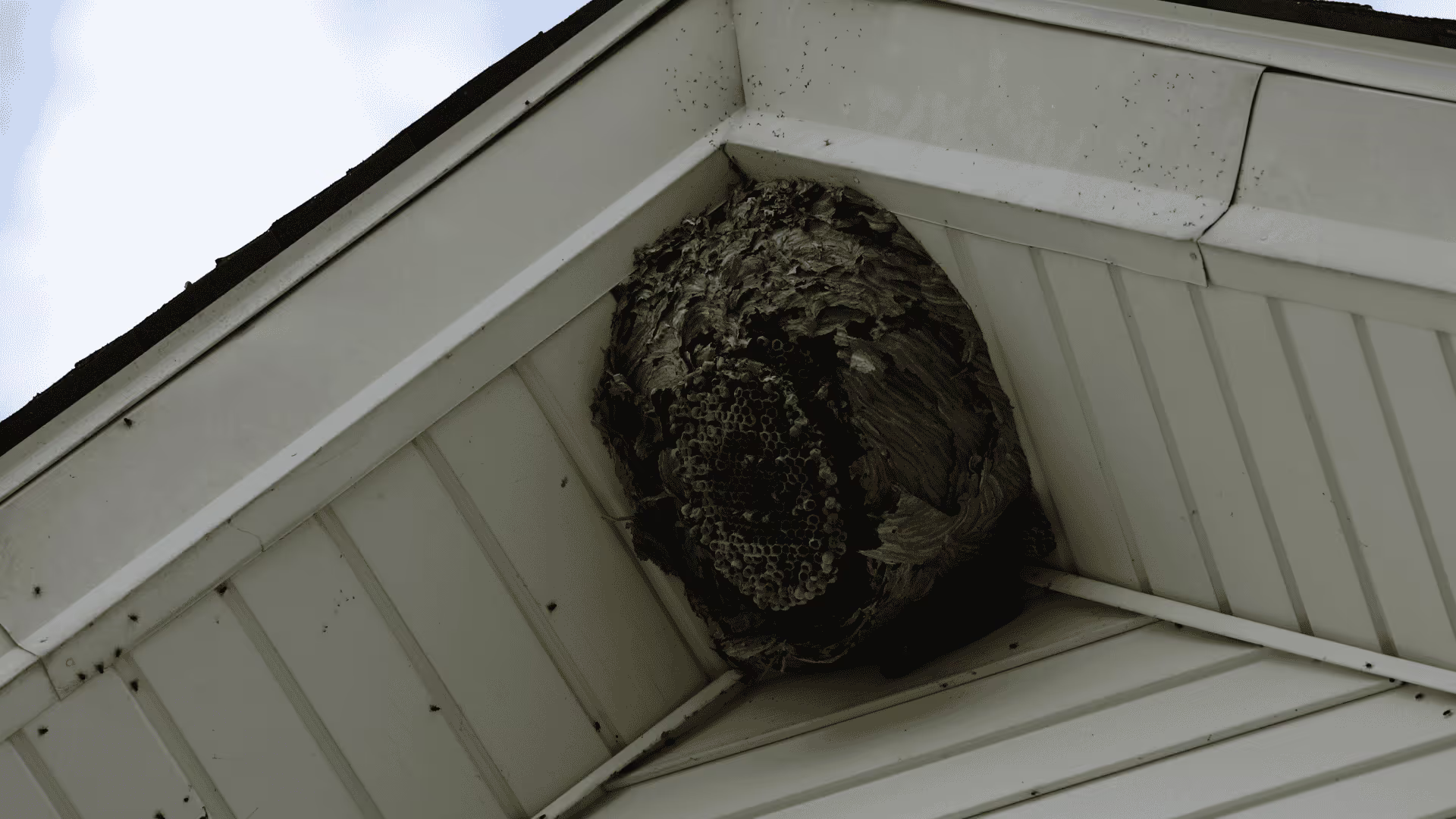
If you've spotted wasps flying in and out of your eaves, noticed papery material forming under a deck rail, or watched yellow jackets disappear into a crack in your foundation, pay attention. Early June is the window when wasp and yellow jacket colonies are still small enough to deal with safely and effectively. By late summer, those same nests can house hundreds to thousands of insects, and that changes everything about how difficult and dangerous removal becomes.
Here's what Utah homeowners need to know about wasp nest removal, from identifying what you're dealing with to deciding whether to call a professional.
What's the Difference Between a Wasp and Yellow Jacket?
People often use "wasp" and "yellow jacket" interchangeably, but they're different insects with different nesting habits, and that affects how you deal with them.
Paper wasps build the open, umbrella-shaped nests you've probably seen hanging from eaves, porch ceilings, or fence posts. The cells are visible, and the nest looks like a small honeycomb. Colonies are relatively small, typically 20–75 workers by peak season. Paper wasps are somewhat less aggressive than yellow jackets, but they will sting if they feel the nest is threatened.
Yellow jackets are more problematic. They tend to nest in concealed locations: underground burrows, wall voids, inside soffits, inside hollow trees, or beneath wood piles. Their nests are enclosed in a papery outer shell and can be hard to spot until the colony is already well-established. Yellow jackets are more defensive and more likely to sting repeatedly, making them the more dangerous of the two.
Where Nests Are Commonly Found Around Utah Homes
In the Salt Lake City area, wasp and yellow jacket activity tends to cluster around a handful of locations:
- Under roof eaves and along soffits
- Behind shutters or inside window frames
- Inside wall voids, especially near utility penetrations
- Ground-level burrows in lawns and garden beds
- Beneath wood decks, patios, and porches
- Inside sheds, garages, and outbuildings
- In or around compost bins and trash cans
Yellow jacket ground nests are particularly easy to disturb accidentally. Mowing the lawn, digging in the garden, or letting a dog run near a burrow entrance can trigger an immediate defensive response from the colony.
Why June Is the Right Time for Stinging Insect Control
Wasp and yellow jacket queens emerge from overwintering in late spring and begin building nests from scratch. In early June, a typical colony has anywhere from a handful to a few dozen workers. The nest itself is small, the population is manageable, and the insects haven't yet reached peak territorial behavior.
By August, that same colony can be 3–4 times larger. Yellow jacket populations peak in late summer, when food sources start to thin and colonies become more aggressive in defending resources. A nest that could be addressed with minimal risk in June becomes a much more significant problem by the time school starts.
The practical takeaway: if you see wasp or yellow jacket activity near your home in June, don't wait to see if it becomes a problem. It will.
Why DIY Removal Carries Real Risk
Hardware store wasp sprays work in some situations, but there are real reasons to think carefully before going the DIY route.
You can't see the full colony. For paper wasp nests hanging in plain sight, you have a decent sense of what you're dealing with. For yellow jackets nesting in a wall void or underground, you don't. Colonies in enclosed spaces can be substantially larger than any external sign would suggest, and disturbing the nest without fully eliminating it often makes the insects more aggressive without solving the problem.
Stings are a serious health risk for some people. An estimated 5–7% of adults have some degree of allergic sensitivity to wasp or bee venom. For people with that sensitivity, multiple stings from an agitated colony can trigger a severe reaction. Even people with no known allergy can experience a dangerous response from a high number of stings at once.
Wrong product, wrong result. Applying the wrong treatment, or applying it incorrectly, can scatter the colony rather than eliminate it. Some DIY treatments push yellow jackets deeper into a wall void rather than resolving the nest, which can create problems when they find an exit point inside the home.
If the nest is small, visible, and in a low-traffic area, a carefully applied wasp spray at dusk (when the colony is settled) can be effective. But for anything underground, inside a wall, or in a location near regular foot traffic, professional removal is the safer call.
Wasp Prevention Tips You Can Do Now
Whether or not you're currently dealing with a nest, these steps reduce the likelihood of wasps and yellow jackets choosing your property.
- Seal gaps around eaves, soffits, fascia boards, and utility penetrations with caulk or expanding foam
- Keep trash cans tightly covered and away from entryways
- Remove fallen fruit from trees and gardens promptly
- Don't leave sugary drinks or food uncovered outside
- Walk the perimeter of your home in May and early June to catch nests while they're still small
- Check sheds, garages, and outbuildings for early activity before the season gets going
Early-season inspection is one of the most effective things a homeowner can do. Catching a nest when it has 10 workers is a very different situation from finding one with 400.
Frequently Asked Questions about Wasps & Yellow Jackets
How do I know if I have a yellow jacket nest underground vs. a bee nest?
Yellow jackets entering and exiting a ground-level hole are typically faster-moving and more erratic in their flight than ground-nesting bees. Yellow jackets also have a shinier, less fuzzy appearance than bumblebees. If you see smooth, rapid insects going in and out of a soil burrow, yellow jackets are the more likely culprit. A pest professional can confirm the identification before treatment.
Is it safe to leave a wasp nest alone if it's not near a high-traffic area?
Possibly, for a single season. Paper wasp colonies die off in fall, and the queens overwinter elsewhere rather than reusing the nest. However, yellow jacket colonies grow significantly more aggressive by late summer, and a nest in or near your home creates increasing risk through the season. Leaving it also doesn't prevent new colonies from forming in the same location the following year.
When is the best time of day to treat a wasp nest?
Dusk or just after dark, when the colony is inside the nest and the insects are less active. Most wasp sprays are designed to be applied at distance. Follow label directions carefully. Avoid using flashlights that could attract insects toward you. This applies to accessible, visible nests only. Do not attempt to treat wall voids or underground nests without professional help.
Will wasps come back to the same spot next year?
Not to the same nest, in most cases. Paper wasp colonies don't reuse old nests, and yellow jacket colonies die off in winter. However, the same protected location remains attractive to new queens the following spring. Sealing entry points after removal is important for keeping nests from re-forming in the same spot.
How much does professional wasp nest removal cost in Salt Lake City?
Cost varies based on nest type, location, and accessibility. A visible paper wasp nest under an eave is a much simpler treatment than a yellow jacket colony inside a wall void. The best way to get an accurate estimate is to call and describe what you're seeing.
Get Help with Wasp Nest Removal This Season
Pest Pro Pest Control has been serving the Salt Lake City area since 2010. If you've spotted wasp or yellow jacket activity on your property and want a professional assessment, give us a call at 801-810-7378. We'll identify what you're dealing with and take care of it safely, before the colony has a chance to grow.
Not sure if we cover your neighborhood? Check our service area to see the communities we serve across the Wasatch Front.
Request Your Free Estimate
Service often can be scheduled within 24 hours.