Utah Wildlife Home Intrusions: Your Seasonal Guide

If you live in Salt Lake City or anywhere along the Wasatch Front, wildlife is not a distant concern. The canyons, foothills, and open land that make Utah such a beautiful place to live also mean that raccoons, bats, squirrels, and birds are your neighbors. When the seasons shift, some of those neighbors start looking for ways inside your home. Understanding when and why this happens is the first step toward keeping your house protected all year long.
Wildlife Intrusions in Utah Follow Seasonal Patterns
Wildlife does not follow a strict calendar, but certain animals are driven by predictable biological rhythms: mating, nesting, foraging, and seeking warmth. In Utah, those rhythms align with our four distinct seasons in ways that create very specific risks for homeowners. Knowing what to watch for in each season can help you catch problems early or avoid them altogether.
Spring (March Through May): The Highest-Risk Season
Spring is peak season for wildlife home intrusions in Utah. As temperatures rise and daylight increases, animals that spent winter in lower-energy states become highly active and highly motivated to find secure nesting sites. For many species, that search ends in your attic, chimney, or crawl space.
Raccoons
Female raccoons are among the most determined home invaders in the spring. They are actively searching for quiet, protected spaces to give birth and raise their young, and an attic checks every box. Raccoons are strong enough to tear through weak fascia, rotted soffits, or improperly secured vents. Once a female has established a den site, she will defend it aggressively. If you hear thumping, chittering, or scratching in your attic between March and May, a raccoon family is a likely culprit.
Squirrels
Squirrels are actively nesting in spring and will exploit any gap larger than a quarter to enter a structure. Rooflines, vents, and the intersection of roof and fascia are common entry points. Unlike raccoons, squirrels are small enough that you may not notice them right away. By the time the damage becomes obvious, they have often been living in the wall voids or attic insulation for weeks.
Birds
Starlings, sparrows, and other birds begin nesting in late winter and carry that activity straight through spring. Dryer vents, bathroom exhaust vents, and range hood vents are particularly attractive nesting sites because they are warm, protected from weather, and often overlooked by homeowners. Nests in exhaust vents can create fire hazards and reduce ventilation efficiency. This is one of the more common and easily preventable wildlife problems Utah homeowners face.
Summer (June Through August): Bat Season and Juvenile Wildlife
Summer brings its own set of wildlife concerns, and the most legally sensitive one involves bats. Utah is home to several bat species, and bats provide enormous ecological value by consuming insects. They are also protected under federal and state law in ways that directly affect how and when they can be removed from a structure.
Bats and the Maternity Season Restriction
From roughly May through August, female bats form maternity colonies to raise their pups. During this window, bat exclusion is not legal in Utah because the pups cannot fly and would be trapped inside if the adults were excluded. If you discover bats in your home during summer, you will need to wait until the exclusion window opens in fall. The right approach is to document the entry points now, keep them in mind, and contact a wildlife professional who can plan the exclusion properly and on the right timeline.
Juvenile Raccoons and Squirrels
Young raccoons born in spring are starting to move around and explore by midsummer. This increases the chance of juveniles wandering into garages, sheds, and other accessible structures. Squirrels remain active through summer and may continue exploiting entry points that were not addressed in spring. Regular visual checks of your eaves, vents, and roofline during summer can help you stay ahead of any new activity.
Fall (September Through November): Squirrels Surge and Bats Can Be Excluded
Fall is a season of transitions, and for wildlife control in Utah, it is both a high-risk period and an important window for taking action.
Squirrels Seeking Winter Shelter
As temperatures drop and food sources become less reliable, squirrels ramp up activity dramatically. They are looking for warm, protected spaces to spend the winter, and attics are exactly what they are after. A squirrel that finds a loose soffit panel or a gap where a vent pipe exits your roof in October will be settled in by December. Fall is the time to be proactive about sealing entry points before squirrels take up residence.
The Bat Exclusion Window
September and October represent the best window for bat exclusion in Utah. The maternity season has ended, the bats are still active enough to leave on their own through one-way exclusion devices, and the weather has not yet turned cold enough to complicate the process. If you discovered bats in your home during summer, this is when to call a wildlife professional and get the job done. Waiting too long into November risks the bats going into a torpor state, which complicates exclusion.
Raccoons in Fall
Raccoons are still active through fall and may probe your home for accessible entry points, particularly as natural food sources become scarce. Unsecured trash cans, pet food left outside, and fruit trees with fallen produce are common attractants. Removing those attractants reduces the chance of raccoons spending time near your home and discovering vulnerabilities.
Winter (December Through February): Assess and Prepare
Winter is generally the quietest season for new wildlife intrusions, but it is far from problem-free. Squirrels that found their way into attics in fall are now fully settled in and will remain through spring if not addressed. Raccoons occasionally seek shelter during cold snaps, particularly in chimneys and crawl spaces. You may also notice signs of ongoing activity from animals that moved in earlier in the year.
Winter is an excellent time to schedule a full home inspection. With leaves off the trees and animals less active, it is easier to spot damage to fascia, soffits, and rooflines. Identifying and sealing entry points now means you will not be starting the spring nesting season with open invitations into your home. Wildlife control professionals can assess your home during winter and prioritize repairs so you are ready before raccoon and squirrel nesting activity peaks again in March.
Year-Round Prevention Checklist
Regardless of the season, there are steps every Utah homeowner can take to reduce the risk of wildlife intrusions. These measures do not require specialized knowledge, and most can be handled with basic tools and an annual inspection routine.
Frequently Asked Questions
Can wildlife be removed in winter?
Yes, with some nuances. Most wildlife species can be removed year-round in Utah, including squirrels and raccoons. Bats are the main exception, since they enter a torpor-like state in very cold temperatures that can complicate exclusion. If you have squirrels or raccoons in your home during winter, a licensed wildlife professional can address the problem regardless of the time of year.
Is spring really the worst time for wildlife problems?
Spring is the highest-risk season for new intrusions because so many species are actively searching for nesting sites at the same time. Raccoons, squirrels, and birds are all in nesting mode from March through May. However, problems that began in fall can be just as serious by winter if they were not addressed. The risk is present in every season in Utah; spring just concentrates it.
Why does Utah have more wildlife intrusions than other states?
Utah's urban areas sit at the edge of significant wildlife habitat. Salt Lake City and its surrounding communities are flanked by canyons, foothills, and open land that support dense populations of raccoons, squirrels, bats, and birds. As development has expanded toward those wild areas, the contact zone between homes and wildlife has grown. That proximity is part of what makes Utah living so appealing, but it also means wildlife encounters are a routine part of homeownership here.
What should I do if I find a baby animal in my attic?
Do not attempt to remove baby animals on your own. In most cases, a litter of young animals in your attic means the mother is nearby and will return. Removing juveniles without addressing the mother often causes more problems, and in some situations it is illegal. Contact a licensed wildlife removal professional who can assess the situation, determine whether young are present, and develop a removal plan that handles the entire family group legally and humanely.
How often should I inspect my home for wildlife entry points?
A thorough inspection once a year is a reasonable baseline, ideally in late winter before spring nesting activity begins. If you are in a high-activity area with mature trees, nearby canyons, or a history of wildlife problems, twice a year, once in late winter and once in fall, is a better approach. After any significant windstorm or roof work, it is also worth doing a quick visual check to make sure nothing has shifted or opened up.
Pest Pro Is Here Year-Round
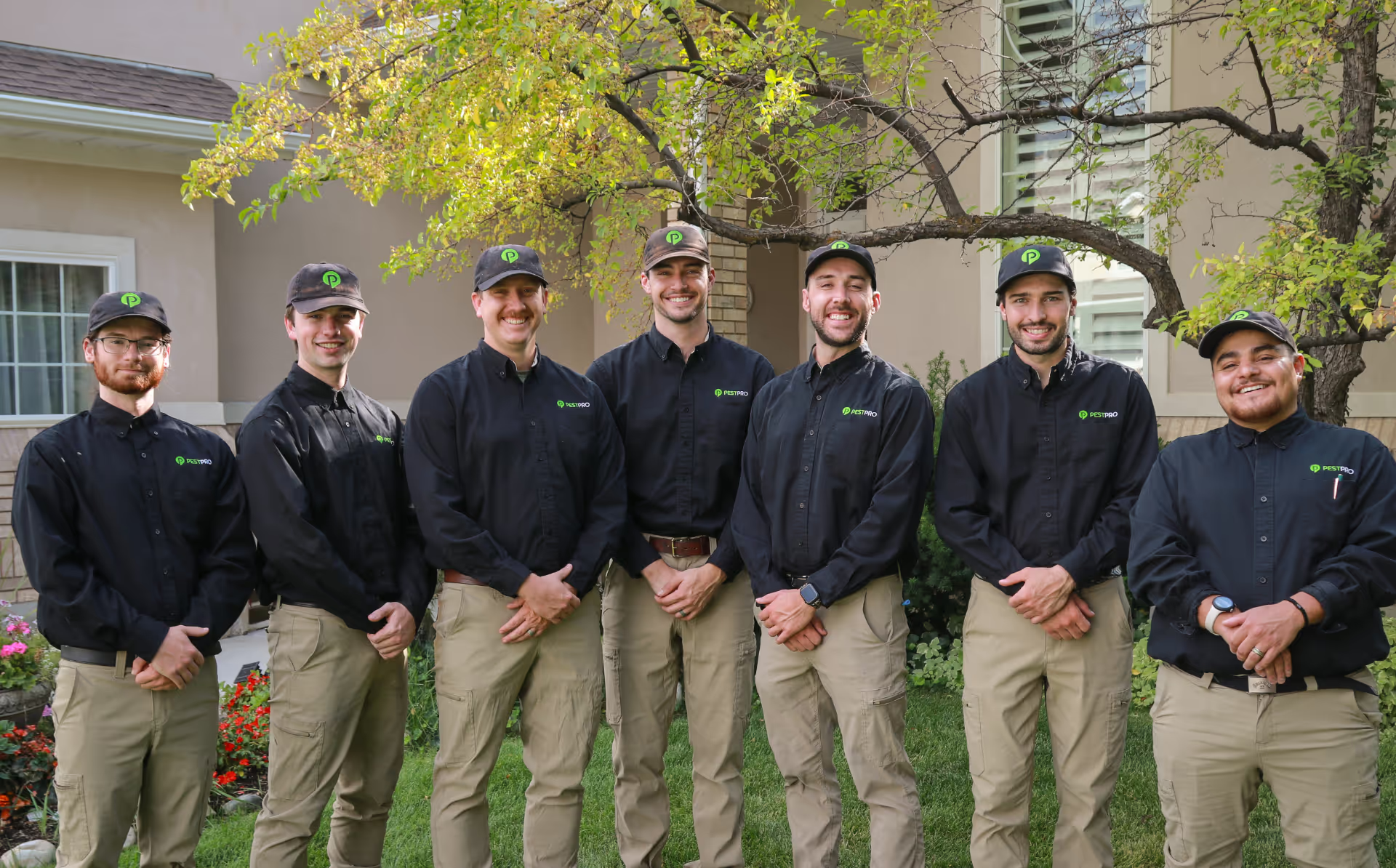
Pest Pro serves Salt Lake City and the entire Wasatch Front through every season. Whether you are dealing with raccoons nesting in your attic in April, bats that need to be excluded in September, or squirrels that have been in your walls since October, our team handles wildlife removal the right way: humanely, legally, and with permanent solutions that prevent the same animals from returning. Give us a call at 801-810-7378 and let us help you protect your home no matter the time of year.
Request Your Free Estimate
Service often can be scheduled within 24 hours.