
How to Tell If You Have a Rodent Problem in Your Utah Home
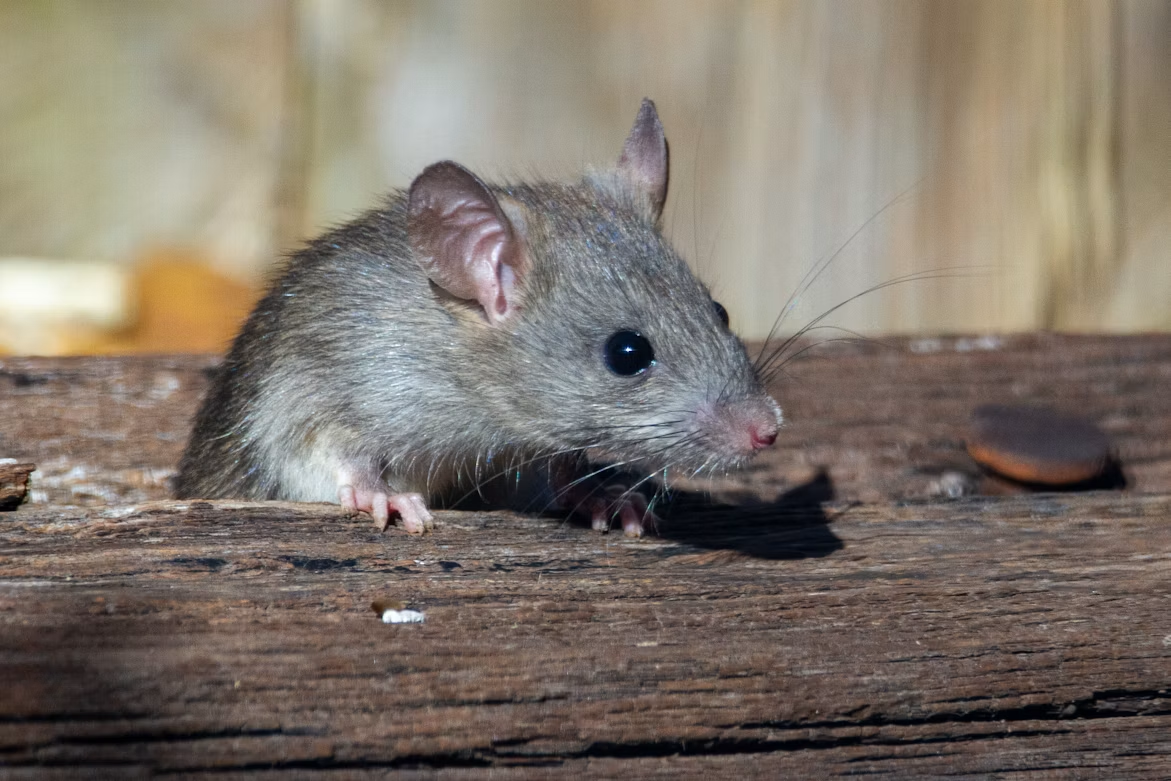
If you've spotted a mouse once and told yourself it was a fluke, you're not alone. That's how most rodent problems start in Utah homes, especially as temperatures drop in the fall and mice and rats start looking for somewhere warmer to spend the winter. The problem is that by the time you see a live rodent, there's usually a lot more going on behind the walls than one stray visitor. Knowing what to look for early gives you a real advantage, and it can save you from a much bigger treatment job later.
Droppings, Grease Marks, and Other Physical Evidence
Rodent droppings are the most common first sign homeowners find, usually near the pantry, under the sink, or along baseboards where walls meet the floor. Mouse droppings are small and dark, roughly the size of a grain of rice. Rat droppings are larger and more capsule-shaped. Fresh droppings are darker and softer; older ones dry out and turn gray. If you're finding a mix of both, you likely have an active infestation, not a one-time visitor passing through.
Grease marks are less obvious but just as telling. Rodents follow the same travel paths repeatedly, and the oils from their fur leave dark smudges along walls, baseboards, and the edges of entry points. If you notice a dirty streak near a gap around a pipe or at the corner of a cabinet, that's a runway, not a coincidence.
Chewed packaging in the pantry and gnaw marks on wood trim or wiring insulation are two more things worth taking seriously. Rodents need to gnaw to keep their teeth down, and they'll work through food packaging, wall material, and electrical wiring. Chewed wiring is a fire hazard, so if you're finding that kind of damage, it's not a situation to leave alone.
Sounds in the Walls and Attic at Night
Mice and rats are nocturnal. If you're hearing scratching, scurrying, or soft thumping sounds after the house settles down for the night, especially in the walls or ceiling between the attic floor and the living space, those are almost always rodents. The activity window is typically dusk through midnight.
A lot of homeowners hear it and assume it's the house settling or pipes expanding. But settlement sounds happen once. Rodent movement repeats, follows paths, and often stops abruptly when you make a sound yourself. If you've heard it more than twice in the same area, it's worth having someone take a look at your rodent control options before the population grows.
Attics are a particularly common harborage area in Utah homes. Roof rats will use overhanging tree branches to access roof lines, and mice can squeeze through a gap the size of a dime. Getting into a house isn't hard for them. Getting them out requires finding those entry points, which is a different job than setting a few snap traps and waiting.
Other Pests That Show Up Alongside Rodents
A rodent infestation doesn't always stay contained to rodents. Mice and rats carry fleas, which is one reason flea and tick treatments and rodent control often overlap in homes with pets. If your dog or cat has suddenly developed a flea problem and you haven't identified a source, a rodent population in the structure is a possibility worth ruling out.
Skunks are another issue that can compound a rodent problem in a different way. Skunks denning under a deck or shed will sometimes share habitat with mice, and both are attracted to the same conditions: easy food access, low disturbance, and gaps in the structure. If you're dealing with what looks like a skunk digging around your foundation, our skunk pest library page is a good place to start identifying whether that's actually what you have.
Cockroaches, meanwhile, are drawn to the same kitchen and pantry conditions that attract mice. A roach exterminator visit sometimes turns up rodent evidence too, because the inspection process covers the same areas. That's part of why a proper inspection matters so much before any treatment starts.
When to Stop Guessing and Call for Exterminator Services
DIY snap traps and store-bought bait stations aren't useless, but they address the population you can catch, not the population using your home as a runway. If you've caught one or two mice and the signs keep coming, the entry points haven't been sealed and the source hasn't been treated. That's the gap between a hardware store fix and professional exterminator services.
Pest control companies that handle rodents properly will inspect before they treat. That means identifying where rodents are getting in, what's drawing them in, and how far into the structure the activity extends. At Pest Pro Utah, our technicians seal what they can during service and flag anything structural that needs additional attention. For ongoing protection, a recurring home pest control plan keeps a consistent barrier in place season to season instead of letting pressure rebuild between treatments.
If you're seeing signs of rodents in your Utah home and want a professional set of eyes on it, request a quote online or give us a call and we'll get you scheduled for an inspection.
Request Your Free Estimate
Service often can be scheduled within 24 hours.