How to Get Raccoons Out of Your Utah Attic or Chimney
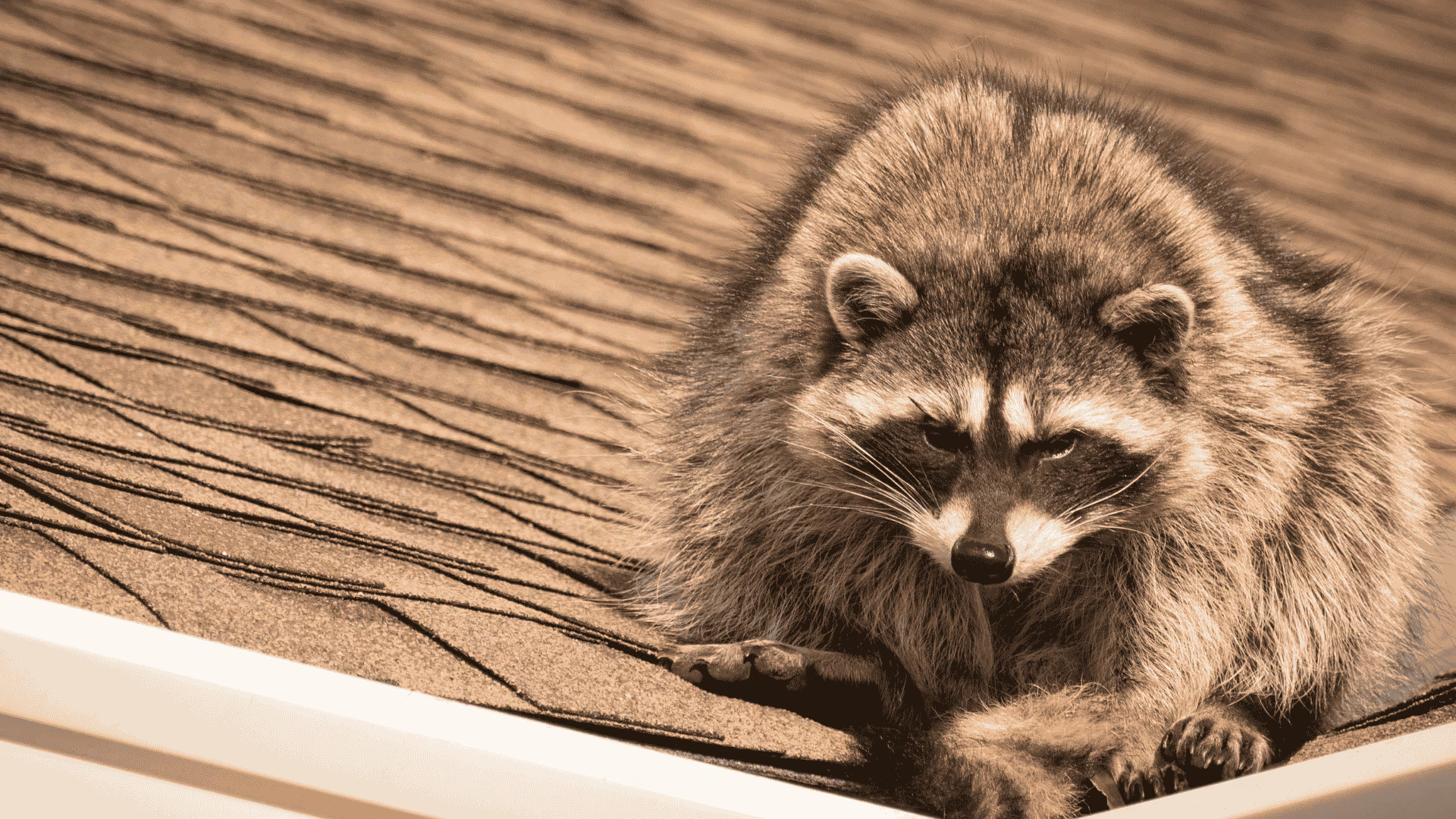
If you live in Salt Lake City, the Avenues, Millcreek, or anywhere along the Wasatch foothills, you already know that raccoons are part of the neighborhood. The canyons that run through the valley give them easy access to residential areas, and mature trees, older rooflines, and accessible trash make urban homes an attractive option. Every spring, as temperatures climb and females look for safe places to give birth, calls about raccoons in attics and chimneys spike across the Salt Lake valley. If you are hearing strange noises overhead or noticing damage around your roofline, there is a real chance you have a raccoon problem that is only going to grow.
Signs You Have Raccoons in Your Home
The first indication is almost always sound. Raccoons are heavier than squirrels or rats, so what you hear is not scurrying. It is thumping, rolling, and shifting weight. At night, raccoon mothers will often make soft chittering or chattering sounds while tending to their young. During the day you may still hear movement, since a nursing female will come and go on her own schedule rather than following a strict nocturnal pattern.
Outside, look for physical evidence. Torn or displaced shingles near the roofline, bent attic vents, and claw marks on wood fascia are all common. Raccoons are strong enough to peel back metal flashing and push through poorly secured vents. Near the base of your chimney or on the roof itself, large paw prints with five distinct toes are easy to identify once you know what to look for. You may also notice a musky, ammonia-like odor. Raccoons establish latrine sites and will return to the same location repeatedly, leaving tubular droppings in concentrated piles that are distinct from rodent droppings in both size and shape.
Why Chimneys Are a Primary Entry Point
An uncapped chimney is one of the most appealing nesting sites a female raccoon can find in an urban area. From her perspective, it behaves exactly like a hollow tree. It is dark, enclosed, warm, and elevated off the ground, which makes her and her kits feel protected from predators. In early to mid-spring, pregnant females actively seek out these spaces, and once a raccoon has used your chimney as a den, others will follow in subsequent years because the scent remains.
Once inside, a female will build a rough nest on the smoke shelf or damper ledge and give birth. The young are typically born in March through May in Utah. They are helpless for several weeks, which means the mother is highly motivated to defend the space and will not simply leave because you bang on the flue. Attempting to smoke them out is dangerous and will not work on a nursing female protecting young.
How Raccoons Get Into Attics
Attic access is usually gained at the roofline. Common entry points include the junction where the roof meets the fascia board, poorly secured or deteriorated soffit panels, gable vents covered only with plastic or aluminum screening, and any existing gap caused by aging construction. Raccoons are persistent and will return night after night to work at a weak spot until it gives. A loose shingle or a small gap at a dormer can become a full entry point within a few nights.
Once inside an attic, they are difficult to detect at first because insulation muffles sound. By the time most homeowners realize they have an animal, there is already a nesting area, a latrine site, and potentially a litter of young on the premises.
What Happens If You Ignore It
Raccoon activity inside a structure causes damage that compounds quickly. The most immediate concern is the insulation. Raccoons compress, shred, and contaminate it with urine and feces to the point where it loses its R-value entirely and needs to be replaced. The droppings themselves present a genuine health hazard. Raccoon roundworm (Baylisascaris procyonis) can be present in fecal matter and is dangerous to humans and pets. Leptospirosis is another concern associated with raccoon urine.
Beyond biological contamination, chewing is a real risk. Raccoons will gnaw on wood, and they frequently damage electrical wiring while doing so. Exposed wiring inside an attic is a fire hazard. What starts as a nuisance wildlife issue can become a structural and safety problem if it goes unaddressed through a full nesting season.
Prevention Steps You Can Take Right Now
Capping your chimney is the single most effective prevention measure for that entry point. A professional-grade chimney cap with welded steel mesh will stop raccoons and virtually every other animal from entering. It should be inspected annually since older caps can rust and loosen.
For attic vents, replace plastic or aluminum screening with heavy-gauge galvanized steel hardware cloth. Standard window screen has no meaningful resistance against a raccoon. Check all gable vents, dryer exhausts, and roof vents for gaps or deterioration at the edges where they meet the framing.
Trim any branches that hang within six to eight feet of your roofline. Raccoons use trees as their primary route onto homes, and a cleared buffer makes access meaningfully harder. Lock your trash cans with bungee cords or locking lids. Remove outdoor pet food at night, and if you have a vegetable garden or fruit trees, be aware that these are active food sources that will draw raccoons into your yard regularly.
Why DIY Removal Is Not a Good Idea
The biggest mistake homeowners make is sealing entry points before confirming the animals are out. If young are present and the mother is sealed outside, the kits will die in the structure. The resulting odor is severe and long-lasting, and you will often end up with a worse problem than you started with. If the mother is sealed inside, she will cause significant damage trying to escape.
There are also legal considerations. In Utah, raccoons are classified as a protected furbearer species. Trapping and relocating raccoons without a permit from the Utah Division of Wildlife Resources is a violation of state law. Beyond legality, trapping a nursing mother separates her from young that cannot survive on their own, which creates both an ethical issue and a practical one.
Raccoons can carry rabies, and while transmission to humans is rare, handling a wild animal or cornering one in a confined space carries real risk. A frightened raccoon is capable of inflicting serious injury. Professional wildlife removal operators are trained and equipped to handle these situations without putting themselves or the animal in unnecessary danger.
Frequently Asked Questions about Raccoons in SLC
Can raccoons really tear into my roof?
Yes. Raccoons have dexterous, strong paws and can peel back weak or damaged roofing material, pry off vents, and pull away rotted wood. They are not gnawing at random. They are specifically testing weak points and exploiting any structural vulnerability they find. Older homes with aging fascia and soffit are particularly susceptible.
What time of year are raccoons most active in Utah?
Raccoons are present year-round in the Salt Lake valley, but activity increases significantly in late winter and spring. Breeding happens in January and February, and females begin actively seeking den sites in February through March. Litters are born between March and May. Fall activity also picks up as raccoons build fat reserves before winter. Spring is when the majority of wildlife removal calls occur.
Is it legal to trap raccoons yourself in Utah?
Utah law requires a furbearer trapping license to trap raccoons, and there are restrictions on relocation. Simply catching a raccoon in a live trap and driving it to a park or open space is not a legal disposal method and can actually spread disease. If you believe trapping is necessary, a licensed wildlife removal professional will handle this within the bounds of state law.
Will raccoons leave on their own?
A lone raccoon exploring your attic might move on. A female that has chosen your chimney or attic as a nesting site will not leave voluntarily until her young are old enough to travel, which can be 8 to 12 weeks after birth. By that point the damage is done and the site has been marked. Waiting it out is rarely the right strategy, and it does not prevent the same animal or another from returning the following season.
How do I know if there are baby raccoons in my attic?
The most reliable indicator is sound. Young raccoons produce a high-pitched chattering or crying vocalization, especially when the mother leaves to forage. It sounds somewhat like a bird or a strange mechanical noise, and it is distinct once you have heard it. If you are hearing this alongside the heavier movement sounds of an adult, there is almost certainly a litter present. A professional inspection will confirm it before any eviction attempt is made.
Get Professional Help from Pest Pro Pest Control
Pest Pro Pest Control serves Salt Lake City and the surrounding Wasatch Front communities with humane, non-lethal wildlife eviction. We do not simply trap and remove. Every raccoon service begins with a full inspection of the structure to identify the primary entry point and any secondary access that could allow re-entry. We then install a one-way humane eviction device that allows the animal to leave but not return. We return for a follow-up visit once the animal has vacated to permanently seal the entry point and any secondary vulnerabilities we found during the initial inspection.
If young are present, our approach accounts for that. We will not seal an animal inside a structure or separate a nursing mother from her litter in a way that causes harm. Our methods are designed to resolve the problem completely and prevent it from recurring, without shortcuts that create bigger problems down the road.
If you are hearing thumping in your attic, noticing damage around your roofline, or have any reason to believe a raccoon has moved into your home, call Pest Pro Pest Control at 801-810-7378. We serve Salt Lake City, the Avenues, Millcreek, Murray, Sandy, Draper, and communities throughout the Salt Lake valley.
Request Your Free Estimate
Service often can be scheduled within 24 hours.