Why Pigeon Nesting Season in Utah Peaks in Fall and What to Do About It
Why Pigeon Nesting Season in Utah Makes September the Right Time to Act
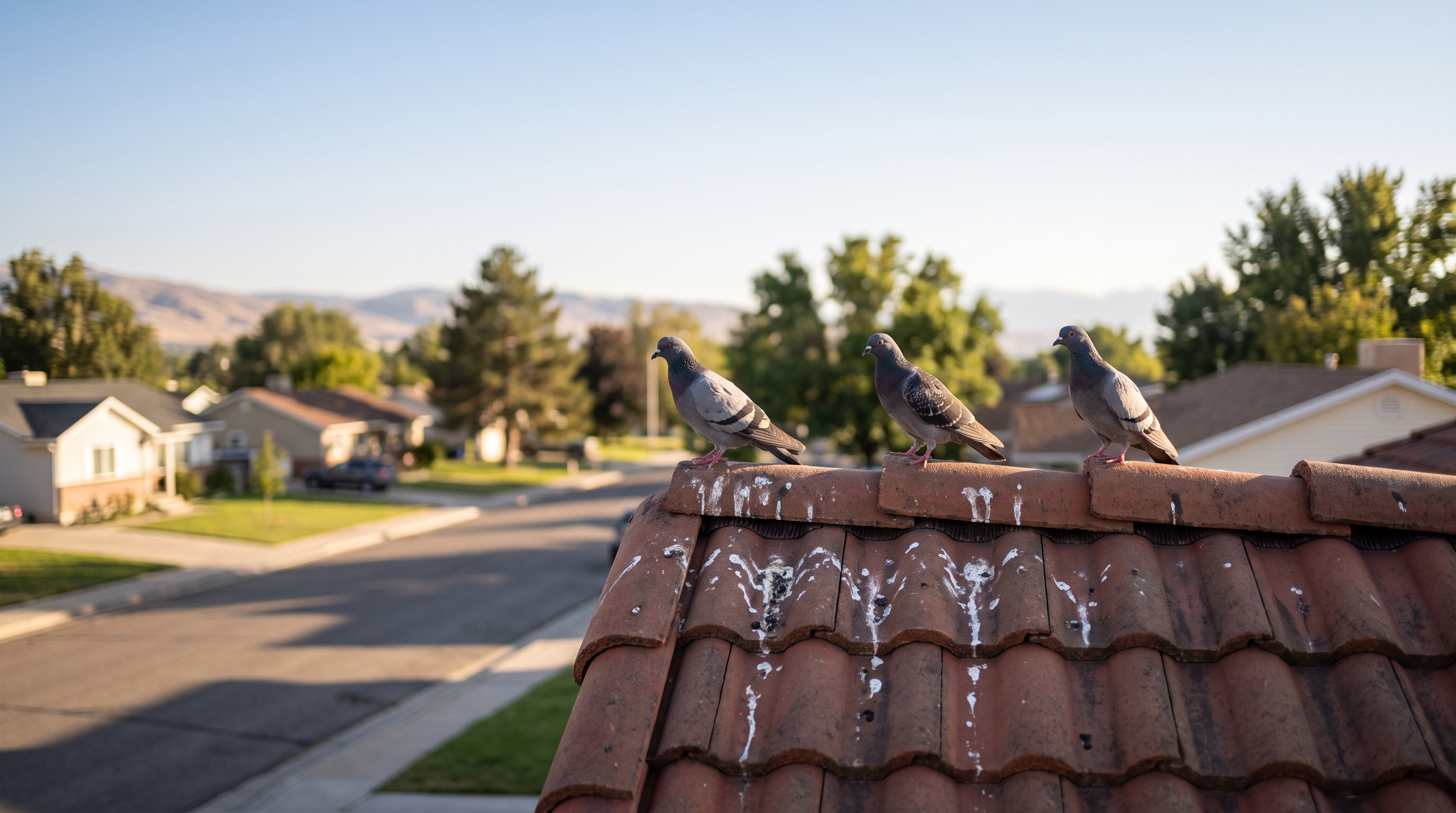
Most people think of spring as nesting season, and for a lot of birds, that's accurate. Pigeons work on a different schedule. They breed year-round where conditions allow, and late summer through fall is when Salt Lake City properties see new roost sites get established, not abandoned. If you've noticed more pigeon activity on your roofline, ledges, or around your solar panels in the past few weeks, that timing isn't a coincidence. September is the window when a new roosting site either starts being viewed as a permanent home or gets interrupted before birds commit to it for the winter.
How Pigeon Nesting Works Through Late Summer and Fall
Pigeons don't nest once a year and move on. A pair can produce multiple broods annually, and they return to the same sites over and over. Late summer is when juveniles from earlier broods start scouting their own roost locations, which means the number of birds looking for ledges, eaves, and flat surfaces expands right as cooler temperatures make covered spots more valuable. In Utah, that timing overlaps with the transition from monsoon-pattern humidity to dry, cooler fall weather, which makes sheltered structures more appealing.
Once a pair commits to a location and starts building, the mess compounds quickly. Pigeon droppings are acidic and accumulate fast. On rooflines, that means damage to flashing, gutters, and roofing material. Around solar panels, nesting debris blocks drainage, traps moisture, and creates conditions that degrade panel mounts over time. The longer a roost is established, the more it signals to other birds that the site is occupied and safe.
Why Exclusion Now Works Better Than Exclusion in January
The practical reason why acting in September matters is behavioral. A pigeon that has spent three or four weeks roosting on your parapet wall has formed a site attachment. Remove the roost in January after winter has fully settled in, and you're working against a bird that has already decided this is its home. Interrupt the pattern in September, before the habit hardens, and the exclusion hardware does its job with less resistance.
Physical exclusion is how this gets solved. Stainless steel spikes on landing surfaces, netting across open eave gaps, and shock track on architectural ledges where spikes aren't practical all help deter pigeons and other pest birds. The right method depends on where they're landing and which species is involved. Our bird control services in Utah start with a site inspection to confirm exactly that before any hardware goes up. At Pest Pro Pest Control, we are one of the few pest control companies in the Wasatch Front that handles physical bird exclusion alongside standard exterminator services, so if the inspection turns up other pest issues, we address them in one conversation.
What Else Shows Up When Birds Move In for the Fall
Pigeon activity on a roofline is rarely the only thing happening. Birds nesting in eaves or above a crawlspace access point create debris, dander, and a food source that draws secondary pests indoors. Carpet beetles feed on feathers and nesting material. Rodents follow the same routes birds open up, particularly once temperatures start dropping and mice and rats start looking for potential access points to get inside. If you've also noticed signs of rodents in your attic or cockroach activity in your kitchen, there's a reasonable chance those problems originated from some of the same structural gaps the birds are using.
We flag this during every bird inspection. If the site visit turns up signs of rodent entry alongside the roost, our team handles both. The same applies if a roach exterminator call leads us to moisture conditions around a crawlspace that's also letting birds nest above it. These problems tend to travel together in the fall more than homeowners expect, and catching the overlap early is where the real value of a thorough inspection shows up.
If you're seeing pigeons settling in around your property, now is the right time to have someone take a look. Request a quote online or give us a call, and we'll schedule a site inspection before the season shifts.
Request Your Free Estimate
Service often can be scheduled within 24 hours.