Mosquito Control Salt Lake City: What Actually Works
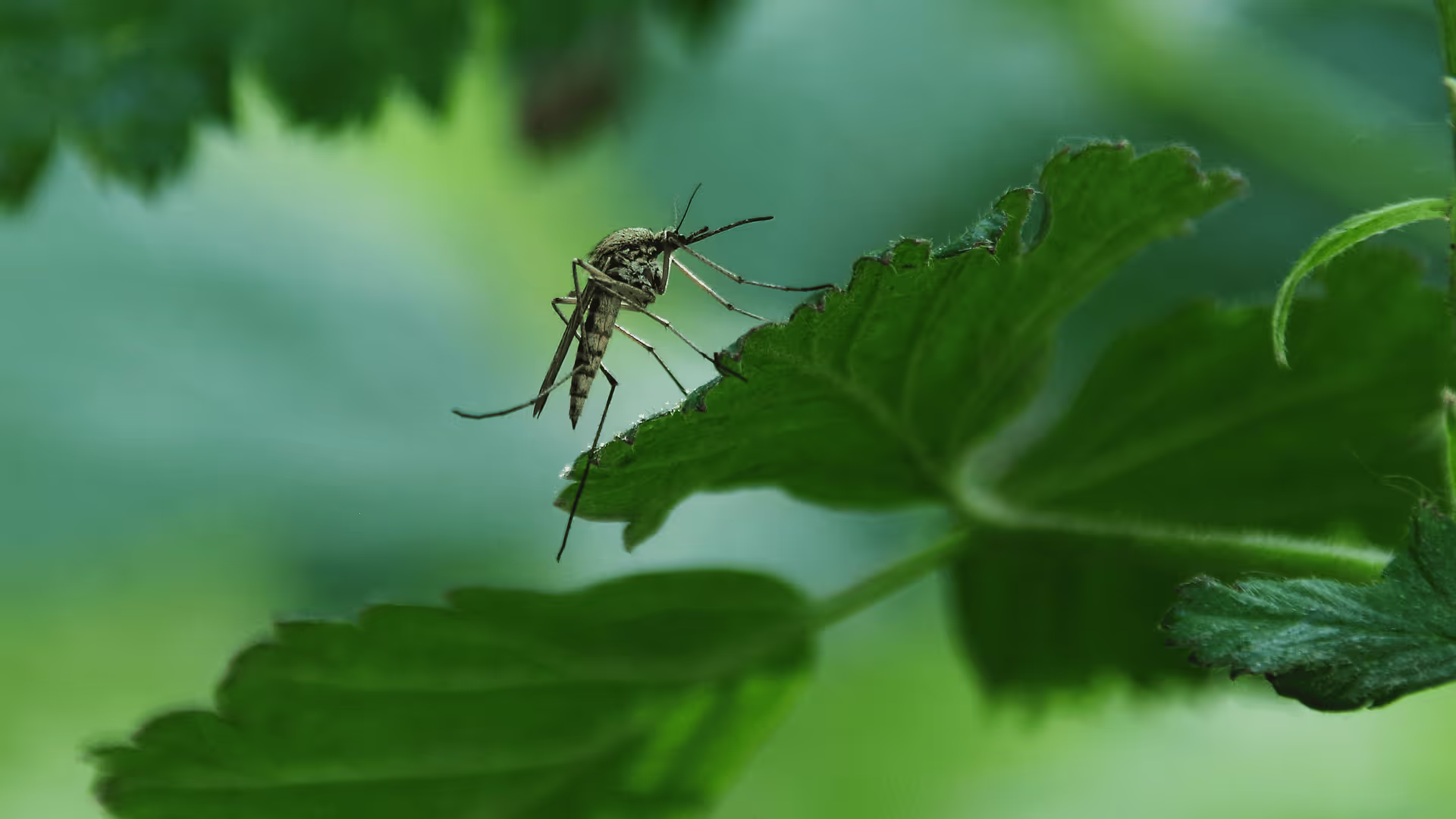
Mosquitoes are a genuine nuisance in Salt Lake City from late spring through late summer, and by July the problem is at its worst. If you've tried citronella candles, clip-on repellents, and various sprays only to still get eaten alive in your own backyard, you're not alone. Most DIY approaches fall short because they address the symptom rather than the source. Here's what actually works.
When Mosquitoes Peak in Salt Lake City
Utah's mosquito season typically runs from late May through September, with peak activity in July and August. In Salt Lake City and the surrounding valley, proximity to the Jordan River, irrigation canals, and the low-lying areas near the Great Salt Lake creates consistent breeding conditions through the summer.
Mosquito populations grow rapidly in standing water. After the snowmelt season and spring rains, any water that collects and sits for more than a week can produce mosquitoes. Warm temperatures accelerate the breeding cycle significantly. At 80°F, a mosquito can go from egg to adult in about 7 to 10 days.
Mosquito activity is highest at dawn and dusk when temperatures are cooler and wind is calm. That said, some species are active throughout the day, particularly in shaded areas. For more on mosquito biology and the species found in Utah, visit our mosquito pest library.
What Doesn't Actually Work
Before covering what does work, it's worth being direct about some commonly marketed options that have limited effectiveness for yard-level mosquito control.
Citronella candles and torches create a small zone of mild repellent effect directly around the flame. They do not protect a yard, a patio, or any meaningful outdoor area from mosquitoes. In calm conditions with no breeze, they may slightly reduce activity immediately adjacent to the flame.
Bug zappers kill insects using UV light, but mosquitoes are not strongly attracted to UV light. Studies consistently show that the insects zappers kill are mostly harmless moths and other non-biting species. They do very little to reduce mosquito populations.
Clip-on fan repellents and wristbands create a small personal repellent zone and wear off quickly. They are not designed for yard-level control and don't protect bystanders.
Outdoor misting systems with essential oils can reduce some activity temporarily but require frequent application, break down quickly in heat and sunlight, and have no residual effect. They are not comparable to licensed professional treatments.
If you are going to be outside in an area with high mosquito pressure and can't treat the space, a DEET-based or picaridin-based personal repellent applied to skin and clothing remains one of the most effective tools available for personal protection.
What Does Work: Yard-Level Mosquito Control
Effective mosquito control for your yard involves two things working together: eliminating or treating breeding sources and applying a residual barrier treatment to resting sites.
Eliminating Breeding Sources
Mosquitoes breed in standing water. Removing or treating standing water on your property is the single most impactful thing you can do to reduce the population that originates from your yard.
- Empty birdbaths and replace the water at least twice a week
- Dump and invert anything that collects water: flower pot saucers, buckets, tarps, children's toys
- Clean clogged gutters, which hold standing water after rain
- Fix low spots in your lawn that pond after irrigation or rain
- Treat ornamental ponds, water features, and rain barrels with Bti (Bacillus thuringiensis israelensis) mosquito dunks, a biological larvicide that is safe for wildlife, pets, and plants
It's worth noting that you don't need a pond or large water feature to have a breeding problem. A bottle cap's worth of standing water is enough for mosquito larvae to develop. The more consistently you eliminate small water sources, the lower your yard's contribution to the local population.
Barrier Treatments
Professional barrier treatments target the areas where mosquitoes rest during the day: the undersides of leaves, dense vegetation, shrubs, ground cover, and shaded areas near the foundation. Mosquitoes are not constantly flying. They spend most of the day resting in cool, shaded, humid spots, and a residual insecticide applied to those resting areas dramatically reduces the active population.
A properly applied barrier treatment typically lasts three to four weeks before reapplication is needed. For peak season control, treatments are scheduled monthly from May or June through September or October depending on conditions.
Professional barrier treatments use products that are not available over the counter and are applied at the right concentration to the right locations by a licensed technician. The difference between a professional application and a homeowner using a hose-end sprayer is significant in both coverage and effectiveness.
Mosquito Prevention Around Your Property
Beyond treatments, a few consistent habits reduce mosquito pressure throughout the season:
- Trim and thin dense vegetation. Overgrown shrubs, tall grass, and dense ground cover create ideal resting habitat. Keeping vegetation trimmed reduces available resting sites between treatments.
- Water in the morning. Irrigation at night leaves moisture on plants and in soil overnight, creating favorable conditions for mosquito resting. Morning watering gives the yard time to dry before peak activity periods.
- Check for overlooked water sources. Tree holes, clogged downspouts, and low spots under decks are easy to miss. Walk your property after rain and look for water that's sitting for more than a few days.
- Keep grass cut short. Mosquitoes rest in tall grass during the day. Regular mowing reduces resting habitat across the yard.
Frequently Asked Questions
Do mosquito traps reduce yard populations?
CO2-baited mosquito traps can capture significant numbers of mosquitoes and may help reduce local populations over time. They work best as part of a broader control strategy rather than as a standalone solution. They require consistent maintenance and CO2 cartridge replacement, and effectiveness varies by trap type, placement, and yard conditions.
Are professional mosquito treatments safe for kids and pets?
Yes, when applied correctly by a licensed technician and allowed to dry before re-entry. Most professional barrier treatments use synthetic pyrethroids, which are derived from naturally occurring chrysanthemum compounds. Your technician will tell you how long to stay off treated areas before resuming normal activity. Bti larval treatments used in water features are safe for all non-target species, including fish, birds, and beneficial insects.
Why are mosquitoes worse near the Jordan River and canals?
Moving water generally doesn't support mosquito breeding, but slower-moving sections, overflow areas, and adjacent standing water along irrigation canals create productive breeding habitat. Areas near these features tend to have higher ambient mosquito pressure that makes yard-level control harder. Regular barrier treatments become more important for properties in these locations.
How long does a professional mosquito treatment last?
Most residual barrier treatments remain effective for three to four weeks, depending on rainfall, temperature, and how much the treated areas get disturbed. Monthly treatments through peak season (June through September) provide the most consistent protection. A single application provides meaningful relief but is not a season-long solution.
Can I treat my yard myself?
Over-the-counter concentrates are available, but effective application requires treating the right locations at the right time with adequate coverage. It's easy to miss resting sites or apply products in ways that waste material without controlling the population. For moderate to heavy pressure, professional treatment generally delivers better and more consistent results.
Ready to Take Back Your Backyard?
Pest Pro Pest Control offers professional mosquito barrier treatments for homeowners throughout the Salt Lake City area, including Sandy, Draper, and Millcreek. We treat the resting and harborage sites on your property and can set up a recurring schedule to keep protection consistent through the season. Check our service area to see if we cover your neighborhood, or give us a call at 801-810-7378 to get started.
Request Your Free Estimate
Service often can be scheduled within 24 hours.