
How to Get Rid of Spiders in Your Utah Home This Winter
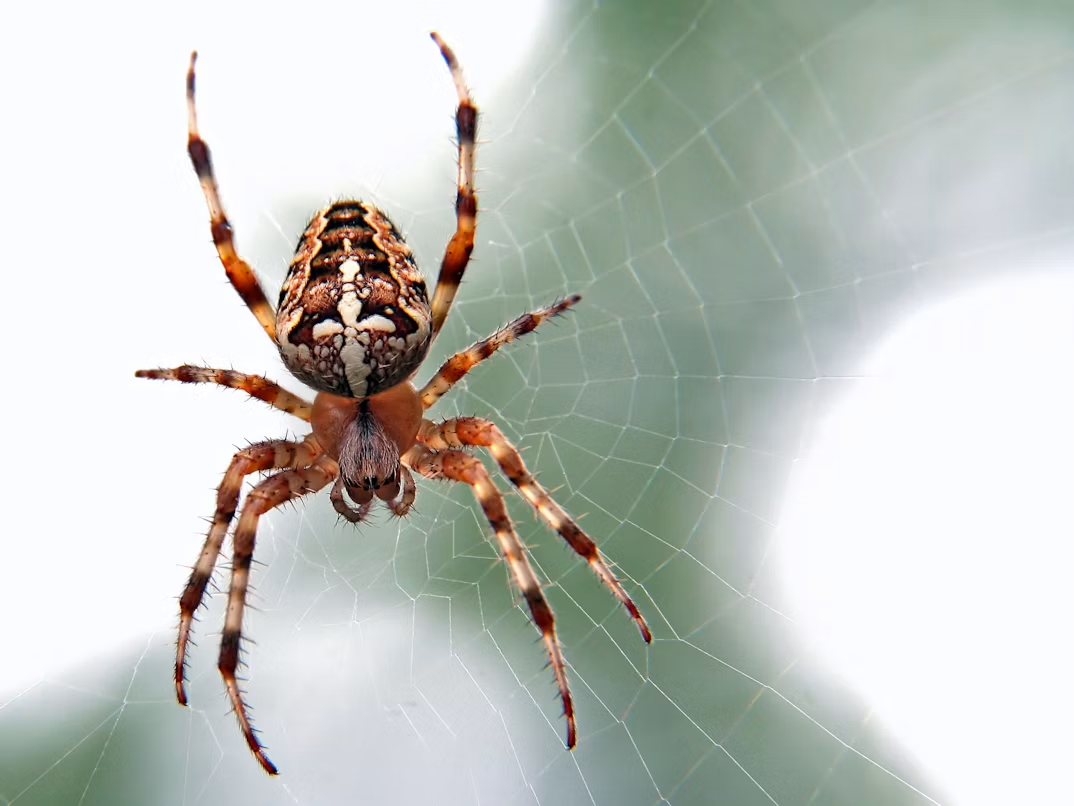
Once temperatures start dropping in Utah, spiders don't disappear. They move inside. Gaps around window frames, spaces under door sweeps, cracks where utility lines enter your foundation, these are the entry points that let black widows, hobo spiders, and a handful of other species trade the cold for the warmth of your walls, basement, or garage. If you've started seeing more webs in the corners of rooms or actual spiders crossing the floor, that's not a coincidence. Here's what actually works for getting rid of spiders in a Utah home, and when it makes sense to stop handling it yourself.
Why Utah Winters Push Spiders Indoors
Most spiders found in Utah homes aren't there because they wandered in accidentally. They're following the same thing you'd follow in October: warmth, shelter, and food. Insects that spiders hunt, including flies, silverfish, and small beetles, also move indoors as the season changes, which makes a heated home doubly attractive. Spiders detect temperature and humidity gradients through sensory hairs on their legs, so they're actively orienting toward warmer spaces once outdoor temperatures dip.
Black widows are a particular concern in Utah because they thrive in sheltered, undisturbed spots: storage areas, woodpiles stacked against the house, garage corners, and crawl spaces. They don't usually wander into living areas the way hobo spiders do, but that doesn't make them less of a problem. You can read more about the species commonly found in this region on our Utah spider pest library page. Knowing what's in your house matters before you decide how to treat it.
What You Can Do on Your Own (and Where It Stops Working)
There are a few steps that genuinely reduce spider pressure before you need to call anyone. Sealing entry points is the most effective one. Check the weatherstripping on garage doors, caulk around window frames and exterior pipe penetrations, and look at where the foundation meets the siding. Spiders don't need much of a gap. A door sweep that's worn down a quarter inch is an open invitation.
Reducing clutter in storage areas helps too, especially in basements and garages where spiders prefer to build undisturbed webs. Cardboard boxes are better replaced with sealed plastic bins. Firewood stacked directly against an exterior wall is a reliable spider habitat; move it at least a few feet out.
Over-the-counter sprays have real limits here. Most residual sprays break down quickly, and they treat surfaces you can see, not the harborage areas behind walls, inside crawl spaces, or along the exterior foundation where spiders are actually sheltering. If you've sprayed twice and the problem is still showing up, the issue is the source, not the spray.
How Professional Spider Control Handles What DIY Misses
Professional spider control is built around treating harborage areas, not just visible webs. Our technicians at Pest Pro Utah start with an inspection that identifies where spiders are entering, where they're sheltering, and what's drawing them in. That changes what gets applied and where. It also tends to reduce how much product is needed, because targeted application to active areas outperforms broadcast spraying across all surfaces.
For black widows specifically, treatment focuses on the foundation perimeter, garage edges, and any exterior ledges or gaps where they establish webs. Interior work targets crawl spaces, utility rooms, and undisturbed storage zones. A one-time service can knock back an active population. A quarterly plan maintains a consistent barrier through the seasons most likely to drive spiders inside, fall and early winter especially.
This is also where pest control companies catch secondary problems. Spiders in high numbers usually mean there's a prey insect population worth addressing at the same time. If our inspection turns up rodent entry points or signs of a roach problem in the kitchen, we flag those too, because solving the spider issue while leaving the food source alone produces limited results.
Other Winter Pests That Often Come in at the Same Time
Spiders aren't the only thing moving indoors in late fall. Mice are a reliable companion problem in Utah homes this time of year, and the same gaps that let spiders in are often large enough for a mouse. If you've been searching for a mice exterminator near me alongside spider solutions, that's not coincidental. Rodents and spiders tend to peak indoors during the same window, which is why our rodent control service and spider treatments are often scheduled together.
Skunks denning under porches and decks are also more common in fall as they prepare for winter rest. They're not a spider issue, but they're often on homeowners' radar at the same time of year. You can find more detail on what that situation looks like on our skunk removal blog post. For any of these winter pest problems, a single inspection lets us assess the full picture rather than addressing one pest at a time.
If spiders are showing up regularly indoors and home remedies haven't held, the inspection is the right next step. Pest Pro Utah serves Salt Lake City and the surrounding Wasatch Front communities. Request a quote online or give us a call and we'll get out to your property and tell you exactly what we're dealing with.
Request Your Free Estimate
Service often can be scheduled within 24 hours.