How Pigeons Get Under Solar Panels in Utah and What Actually Fixes It
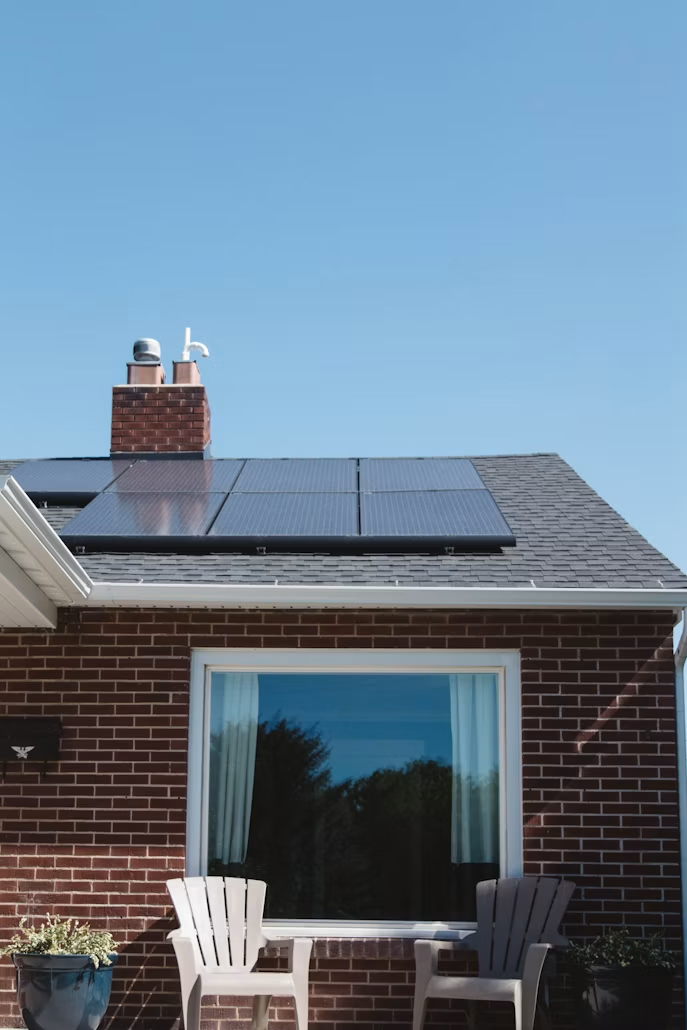
Pigeons don't care that your solar panels cost thousands of dollars. They see a warm, sheltered gap between the panel and the roof and they move in. Once a flock establishes a roosting spot, the droppings accumulate fast, the nesting material blocks airflow, and the panels start losing efficiency. If you're already seeing birds circling your roofline or noticing buildup around your array, this article covers what's actually happening and what pigeon control in Utah looks like when it's done right for solar-equipped roofs.
Why Pigeons Target Solar Panels on Utah Roofs
The gap between a rooftop solar array and the roof surface is almost purpose-built for pigeons. It's dark, protected from wind and predators, and radiates warmth. For a bird that nests on ledges, it's a better option than most of what's naturally available in a suburban neighborhood.
Utah's climate reinforces the problem. Pigeons don't migrate. They stay year-round, and they return to the same roosting sites season after season. A pair that finds your panels in the spring will be back next year with more birds. The flock size grows because pigeons breed quickly and offspring tend to roost near where they hatched.
The droppings issue compounds over time. Fresh pigeon waste is caustic enough to degrade roofing materials and corrode the aluminum framing that holds panels in place. Accumulated nesting material creates a fire risk near electrical connections. Beyond that, a layer of droppings on the underside of a panel interferes with heat dissipation, and thick buildup on the surface directly cuts into the energy output of the array.
You can read more about pigeon biology and why this bird is such a persistent urban pest on our pigeon pest library page. The short version is that they're adaptable, they breed constantly, and they don't leave on their own once they've established a roost.
What Doesn't Work (and Why Pest Sprays Aren't the Answer)
This is worth stating plainly: no pesticide control service or chemical treatment removes pigeons. Birds aren't insects. Exterminator services for cockroaches, a roach exterminator visit, rodent control for mice, even the exclusion work we do for skunks and other wildlife, none of those tools translate to a bird problem. If a pest control company is offering you a spray for pigeons, that's a red flag.
Shiny tape and fake owls are the DIY version of the same error. They work for about a week until pigeons figure out the decoy isn't moving. Noise deterrents frustrate the neighbors before they frustrate the birds.
What does work is physical exclusion. The goal is to remove the gap the birds are using. For solar arrays, that typically means installing a mesh or wire barrier around the perimeter of the panels that prevents birds from getting underneath, while still allowing ventilation and access for panel maintenance. The material and installation method have to be matched to the specific mounting system, or you risk voiding equipment warranties or creating new entry points.
How Professional Pigeon Control Works for Solar Panels in Utah
At Pest Pro Utah, a solar panel pigeon job starts the same way any service does: with an inspection. We look at the array layout, the current mounting hardware, how the panels sit relative to the roofline, and how established the roosting behavior is. An array that's had pigeons under it for two seasons needs the nesting material and waste cleared before any exclusion hardware goes in, both for the effectiveness of the barrier and because dried pigeon droppings carry health risks and shouldn't be left in place.
After cleanup, we install exclusion hardware around the panel perimeter. The specific system depends on the roof and panel type. Mesh is most common for residential arrays. The attachment method matters a lot here because improper fastening can damage panel frames or the roofing surface below, so we work to fit the exclusion to the structure rather than force a one-size approach.
Our bird control services cover homes and commercial properties. For properties with flat roofs, multiple arrays, or large flocks, the solution may involve additional deterrent systems like spikes on adjacent ledges. The inspection tells us what's actually needed.
Other Pests That Tend to Show Up at the Same Time
A roofline with active pigeon activity often attracts secondary pest problems. Pigeons carry mites and fleas that can migrate into the attic space once nesting material builds up against the roof surface. Gaps opened by birds working at flashing or vents can become entry points for mice, a problem our rodent control team handles regularly across the Wasatch Front.
It's also worth mentioning that if you're dealing with multiple pest issues at once, whether that's a pigeon problem on the roof and something less identifiable inside the walls, Pest Pro Utah handles both sides. We're not a single-service operation. We cover wildlife control for raccoons and squirrels, spider control, and the range of common household pests that show up throughout the year. The pigeon work and the pest work are done by the same licensed team, so you're not coordinating two separate contractors for problems that often share a root cause.
If you're seeing birds around your solar array or want to get ahead of the problem before winter, give us a call or request a quote online and we'll schedule an inspection.
Request Your Free Estimate
Service often can be scheduled within 24 hours.