Why Bird Fouling on Commercial Properties in Salt Lake City Is a Bigger Problem Than It Looks
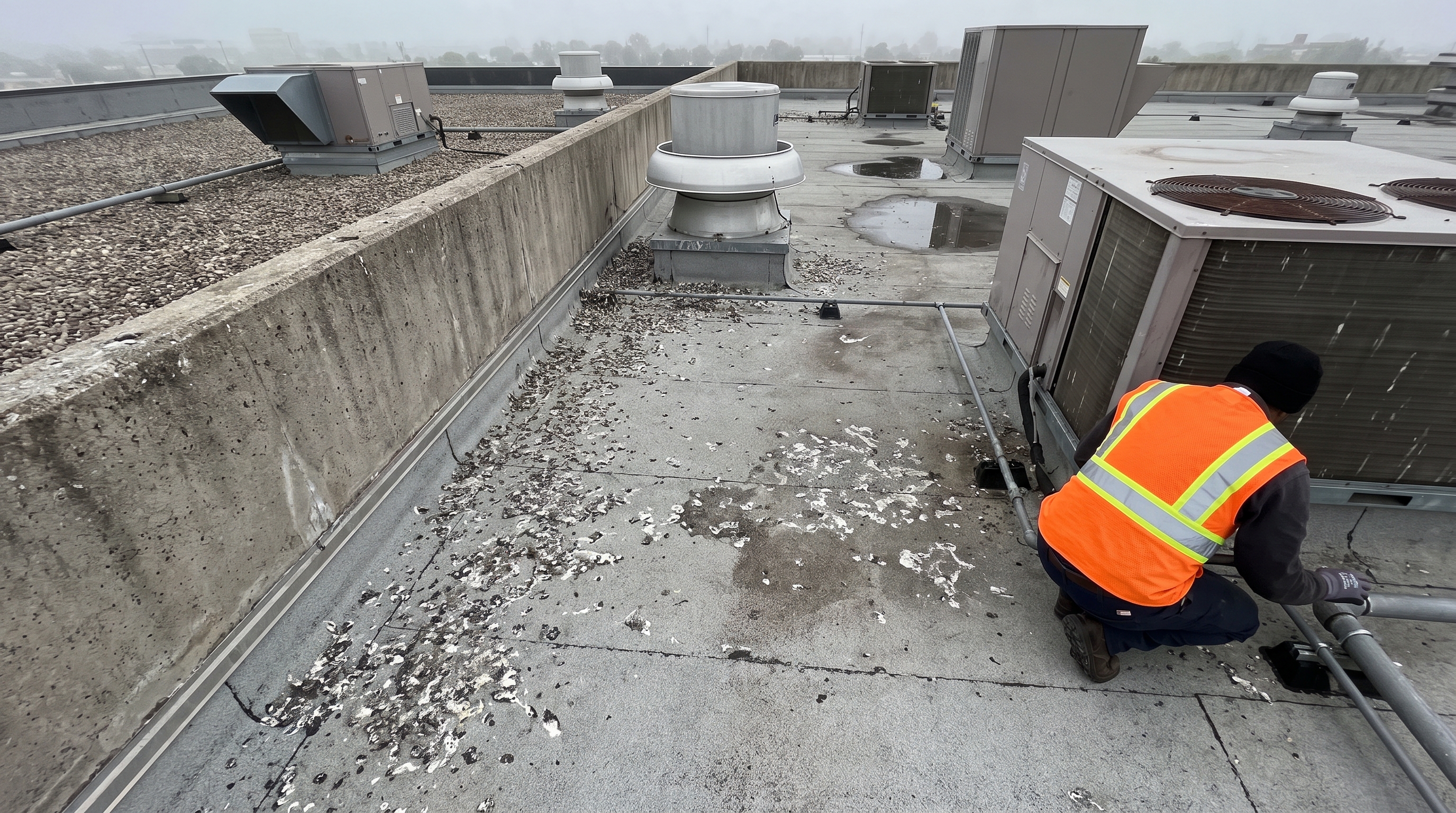
Pigeons on a loading dock. Starlings packing an HVAC intake. Gulls settling onto a flat roof over a restaurant kitchen. Commercial properties around Salt Lake City attract pest birds for reasons that have almost nothing to do with luck and everything to do with structure: flat surfaces, warm mechanical exhaust, and consistent food access at ground level. The fouling those birds leave behind isn't just a cleaning problem. It creates slip hazards, accelerates roof membrane wear, contaminates air handling equipment, and in food-service environments, it can put a health inspection at risk. Understanding why birds are settling on your building is the first step toward fixing it for good.
Why Commercial Properties Get Hit Harder Than Residential Ones
Residential rooflines have pitch. Commercial buildings, especially the warehouses, retail strips, and restaurant pads common across the Salt Lake Valley, tend to have flat or low-slope roofs with parapet walls, mechanical units, and wide ledges that pigeons treat as purpose-built perches. Once a flock establishes a roosting site, they return to it daily. Droppings accumulate fast, and the uric acid in bird waste degrades roofing material, clogs drains, and works into seams over time.
Loading docks are their own category. The overhead doors create shelter, deliveries bring food scraps, and the traffic pattern means people are in and out constantly but rarely looking up. Pigeons and starlings nest above dock doors and in the structural cavities of loading bays without anyone noticing until the fouling starts showing up on product, equipment, or the dock floor itself. At that point, the problem has been building for weeks or months.
HVAC intakes are the third common pressure point. Starlings in particular will nest in any cavity large enough to fit them, and rooftop mechanical units give them exactly that. Nesting material in an air handler introduces debris, bacteria, and feather particulates into the building's air supply, which is a serious concern for any property with employees or customers inside.
Physical Exclusion Is the Only Fix That Holds
A lot of property managers try deterrents first: fake owls, reflective tape, sound devices. Birds figure those out within days. The reason professional bird control in Salt Lake City produces lasting results where DIY shortcuts don't is that it addresses the physical foothold rather than trying to scare birds away from one the have already claimed.
The three systems that actually work on commercial structures are netting, stainless steel spikes, and shock track. Netting closes off open cavities, the undersides of loading dock canopies, eave gaps, and solar panel mounting gaps where birds nest behind the panels. Spikes go on ledges and parapet walls where birds land before committing to a roost. Shock track is the right call on architectural ledges, signage, and HVAC equipment where spikes aren't practical. It delivers a mild, harmless pulse that conditions birds to avoid the surface without injuring them.
Which system fits your building depends on the bird species involved, where they are landing, and how long they have been established. That's why we start every commercial bird control job with a site inspection rather than showing up with a truckload of spikes and guessing. Pigeons roosting on a parapet need a different solution than starlings nesting inside a mechanical unit, and getting that wrong means re-treating the same building in six months.
Bird Problems Connect to Other Commercial Pest Pressure
When birds move onto a commercial property, fouling isn’t the only concern. Nesting material and droppings create conditions that attract secondary pests, like carpet beetles feeding on feather debris, flies breeding in accumulated fouling, and rodents drawn to the food scraps that accumulate around a dock where birds are active. If a restaurant or food-processing facility has a pigeon problem on the roof and a fly problem in the kitchen, those two things are often connected through the building's exterior.
Our commercial pest control service covers the full range of pests that Salt Lake City businesses often face, from roach exterminator work in kitchens to rodent control for warehouses dealing with mice in the walls. When our technicians visit a commercial property for a bird inspection, they are looking at the whole picture. A loading dock that's hosting pigeons overhead and showing rodent activity along the foundation is one conversation, not two separate service calls. We handle the pesticide control service side and the exclusion hardware side, which means you're not coordinating multiple exterminator services for problems that share the same root cause.
If your Salt Lake City property is dealing with bird fouling, or if you're seeing signs that bird activity is bringing other pests along with it, the right move is a site inspection before the problem gets further into your structure. Check our service area to confirm we cover your location, then request a quote or give us a call, and we'll get someone out to take a look.
Request Your Free Estimate
Service often can be scheduled within 24 hours.